
-
By ASE Makine Editoryal Ekibi
-
September 30, 2026
- 0 Comment
What Is a Stator? What Does a Plastering Machine Stator Do?
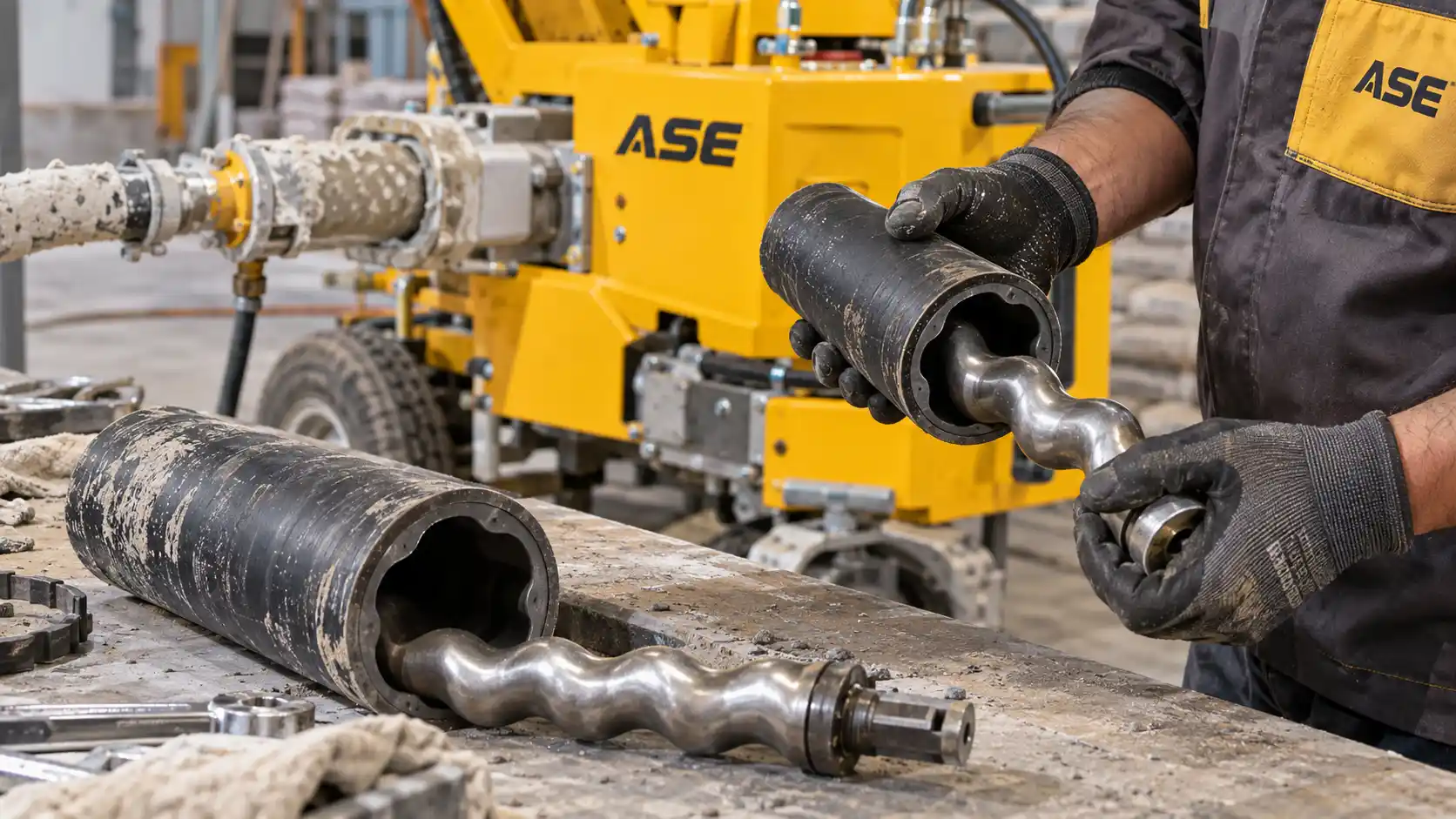
In plaster, screed, and mortar pumps, the “stator” is the fixed housing made from special wear-resistant rubber, inside which the rotor (helical shaft) rotates. Together with the rotor, it forms the heart of the pump: the mechanism that grips the mortar and pushes it through the hose under pressure works through the coordinated operation of these two parts. In this article, we explain what a plastering machine stator is, how it works, when it should be replaced, and how to choose the right spare part.
Note: The word “stator” is also used for electric motors and alternators (the stationary winding section of a motor). This article covers the stator in plaster and mortar machines—that is, the rubber housing of the progressive cavity pump.
What Is a Plastering Machine Stator?
ASE plaster and mortar pumps operate on the progressive cavity pump principle. This system has two main components:
- Stator: The stationary housing, made from special wear-resistant rubber, inside which the rotor rotates. Its inner surface has a spiral cavity shaped to match the rotor’s helix.
- Rotor (helical shaft): A helical shaft made from hardened metal that rotates inside the stator.
The stator is stationary while the rotor moves. As the rotor turns inside the stator, sealed cavities form between them, allowing the mortar to move continuously and without pulsation. The stator’s rubber construction makes a tight seal against the rotor, keeping these cavities leak-proof—the pump’s pressure and flow rate depend largely on the quality of this contact.
What Does a Stator Do?
The stator’s purpose is to form sealed conveying cavities between itself and the rotor. These cavities ensure that:
- Mortar is conveyed forward smoothly, without flowing back.
- Stable flow and pressure are achieved.
- Spraying is even and consistent.
As the rubber stator wears over time, its contact with the rotor weakens. The cavities are no longer fully sealed, mortar starts to flow back, and pump efficiency drops. That is why the stator is a critical component that directly determines machine performance.
When Should the Stator Be Replaced?
The stator is a wear part by nature (like the rotor). Signs of wear include:
- Reduced pumping flow rate and pressure
- Weak or interrupted spraying, or mortar flowing back
- The machine straining and the motor overheating
Important rule: Replace the stator and rotor as a set. The rubber stator and metal rotor must work together in perfect alignment. Replacing only one can cause a mismatch and make the new part wear out quickly. Replacement intervals depend on usage intensity, the abrasiveness of the material being pumped, and maintenance (typically after applications covering thousands of square meters).
How to Extend Stator Life
- Do not run it dry: The stator’s biggest enemy is running without mortar or water inside; the rubber burns out immediately. Always operate the pump with material in it.
- Clean it after every use: Mortar left to dry inside wears down the stator and can cause blockages.
- Use the correct tightening adjustment: Some stators are clamped or adjustable; the rotor-stator contact should be neither too loose nor too tight.
- Use genuine, compatible parts: A stator suited to your machine model helps maintain efficiency and prevents rotor wear.
Choosing the Right Stator: Model Compatibility Matters
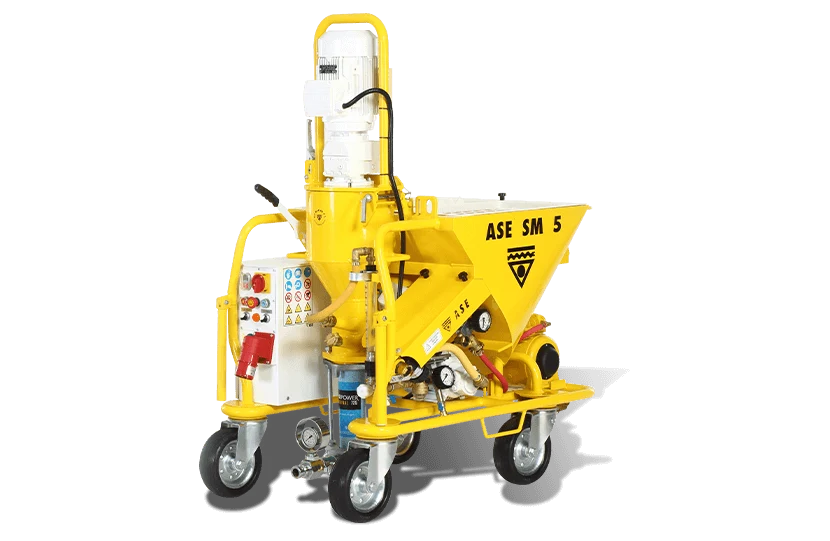
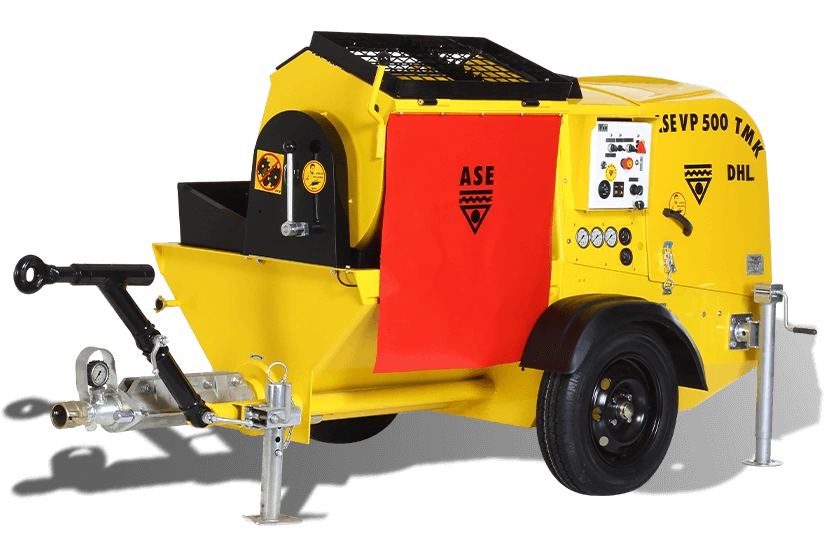
ASE machines use different rotor-stator sets depending on the pump assembly (for example, D 6-3, D 7-2,5, and D 8-2, as well as clamped “LIGHT” stator options). The wrong size will deliver neither efficiency nor long service life. That is why it is important to provide your machine model or the part’s stock code when ordering a stator.
ASE is a domestic manufacturer; wear parts, including rotor-stator sets, are stocked in Türkiye and supplied quickly. Our vision is clear: our real work begins after the sale—providing reliable, affordable spare parts quickly.
Let’s find the right rotor-stator set for your machine together. [Rotor-Stator ve Yedek Parçaları inceleyin →]
Frequently Asked Questions
Is a plaster machine stator the same as an electric motor stator? No. In a plaster/mortar machine, the stator is the rubber housing of the progressive cavity pump. The stator in an electric motor or alternator (the stationary winding) is an entirely different part. This article is about plaster machine stators.
Should the stator or rotor be replaced? Both should be replaced as a set. Replacing just one part can cause incompatibility and rapid wear.
Why does a stator wear out quickly? The most common cause is dry running (without mortar or water). Abrasive materials, inadequate cleaning and incorrect tightening settings can also shorten its service life.
How do I find out which stator I need? Send us your machine model or the part’s stock code, and we’ll provide the appropriate rotor-stator set.
Related Content
- Products / Spare Parts: Rotor-Stator and Auger Shaft · Traditional Plastering Machines · Premixed Plastering Machines


